Surendranagar Farmers Protest BPCL Pipeline, Demand 4x Jantri
Farmers of Dharmendragadh, Umarda and Chorvira in Muli taluka, Surendranagar, have halted BPCL pipeline work on about 100 vigha. Alleging just Rs 12 per sq m compensation, they demand four times jantri and crop-loss payment.
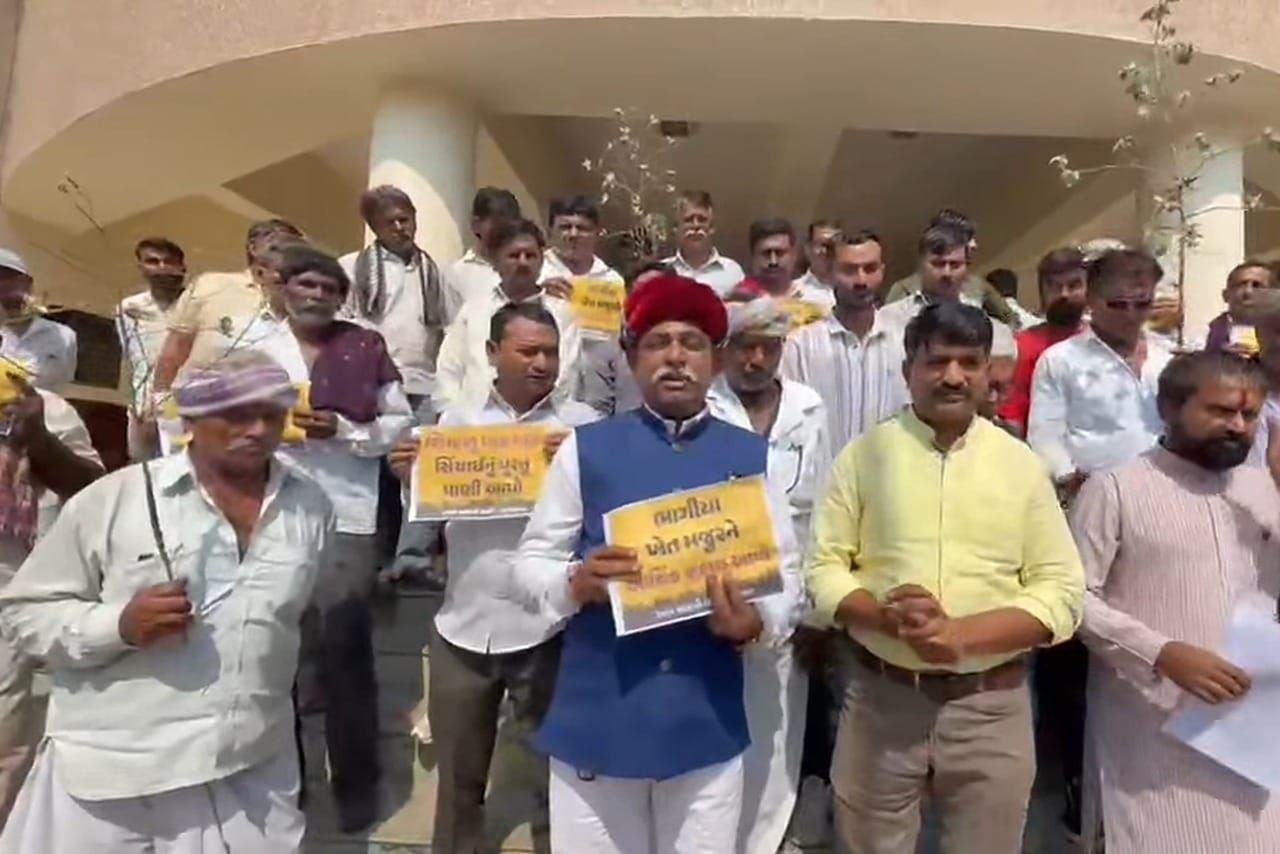
Surendranagar, November 4, 2026: Farmers from three villages in Muli taluka of Surendranagar district, Gujarat, have halted work on a Bharat Petroleum Corporation Limited (BPCL) pipeline passing through their fields. They allege the compensation is inadequate, that the soil restoration they were promised has not been done, and that nothing has been paid for crop losses. The farmers of Dharmendragadh, Umarda and Chorvira say the pipeline work will not resume on roughly 100 vigha of their land until their demands are met. Their key demand is compensation at four times the government's jantri rate.
Quick Summary: What Is Happening in Surendranagar?
- Where: Dharmendragadh, Umarda and Chorvira villages, Muli taluka, Surendranagar district, Gujarat
- Who: Farmers whose agricultural land falls on the route of a BPCL pipeline
- Land affected: Approximately 100 vigha across the three villages
- Current compensation (as claimed by farmers): About Rs 12 per square metre
- Main demand: Compensation at four times the jantri (government land rate), plus payment for crop losses
- Other grievances: Promised soil-levelling and restoration work not completed; land along the pipeline allegedly unfit for crops for up to five years
- Status: Pipeline work stalled; farmers warn they will not allow work to restart until the issue is resolved
Why Are Surendranagar Farmers Protesting Against the BPCL Pipeline?
The farmers' anger centres on three grievances that have built up as the pipeline route moved through their fields.
1. Compensation the farmers call "too little"
According to the farmers, BPCL is paying around Rs 12 per square metre for the land used along the pipeline route. They say this amount bears no relation to the real value of fertile farmland or to the income they lose when their fields are dug up. They want compensation calculated at four times the jantri, the land rate notified by the Gujarat government.
2. Soil restoration promises not kept
When a pipeline is laid, a trench is dug through the field, the pipe is lowered in, and the soil is refilled. Farmers say the company had assured them that the land would be properly levelled and restored after the work. They allege this "maati kaam" (soil work) has not been done as promised, leaving uneven land, mixed subsoil and damaged topsoil that hurts productivity.
3. Crop losses and years of reduced yield
Farmers say the strip of land through which the pipeline passes cannot produce a proper crop for about five years after the work. For small and marginal farmers this is a major hit. They are demanding separate compensation for standing crops destroyed during construction and for the years of lost yield that follow.
Repeated Representations, No Solution
The farmers say they did not take to protest as a first step. They have repeatedly approached the Mamlatdar and the Deputy Collector with their demand for four times the jantri compensation. They say none of these representations has produced a solution, and so they decided to stop the work on their land.
Their position is clear: unless compensation, soil restoration and crop-loss payments are settled, they will not allow the pipeline work to move forward on their fields.
At the time of writing, no public response from BPCL or the district administration on the farmers' specific demands had been reported.
What Is Jantri and Why Do Farmers Want "4 Times Jantri"?
Jantri is the official land valuation rate notified by the Government of Gujarat for each area. It is used to calculate stamp duty and registration charges on property transactions. Jantri rates are often much lower than the actual market price of land, especially for farmland near roads, towns or industrial corridors.
When farmers demand "four times the jantri," they are asking for compensation pegged to an official benchmark and multiplied, so that it comes closer to the real economic loss. Multipliers on jantri or market value are a common demand in land-related disputes in Gujarat. The state's own recent decisions on power transmission lines (explained below) have strengthened such demands.
How Does Land Compensation for Oil and Gas Pipelines Work in India?
For petroleum and gas pipelines, companies usually do not buy the land outright. Under the Petroleum and Minerals Pipelines (Acquisition of Right of User in Land) Act, 1962, the government acquires only a right of user (RoU) in a strip of land along the route. Ownership stays with the farmer.
In simple terms:
- The farmer remains the owner of the land and can generally continue to cultivate it after the pipeline is buried.
- Within the RoU strip, there are restrictions. The owner typically cannot construct buildings, dig wells or tanks, or plant deep-rooted trees over the pipeline.
- Compensation is paid for the right of user and for damage caused during construction, including damage to crops, trees and the soil.
Because the farmer keeps ownership, the per-square-metre payment for an RoU is often far lower than outright purchase prices. This gap is at the root of many pipeline disputes across India. Farmers argue that the permanent restrictions reduce their land's value and future options, so they should be compensated more fairly.
A Pattern Across Gujarat: Farmers Push Back on Infrastructure Compensation
The Muli protest is not an isolated case. Over the past several months, farmers across Saurashtra have raised their voices over compensation for infrastructure passing through their land.
Power transmission line protests and the state's compensation hike
Farmers' discontent over land affected by high-voltage transmission lines and towers had been building for a long time. A fresh phase of protests gained momentum from June 9, 2026, with Jetpar village in Morbi district becoming a major centre of the agitation. In response, the Gujarat government announced a significant increase in compensation. Affected farmers will now receive twice the prevailing market value of the land. The state also scrapped the instalment-based system, so the full compensation is paid upfront before project work begins.
This decision is now being cited by farmers in other disputes. Many pipeline-affected farmers ask why a similar, upfront and market-linked formula should not apply to them as well.
Earlier unrest in Surendranagar itself
Surendranagar district has already seen sharp confrontations over such projects. Earlier this year in Kondh village, around 200 farmers opposed the laying of a high-tension line by a power grid company. More than 500 police personnel were deployed as the company continued work under tight security. The farmers there also demanded adequate compensation and a properly decided corridor.
Political pressure building
The compensation issue has also entered the political arena. On October 22, Congress leader and Gujarat in-charge Randeep Surjewala demanded higher compensation for farmers whose land is affected by power transmission lines. He also sought a drought declaration for Saurashtra and a waiver of crop loans.
A Difficult Year for Surendranagar's Farmers
The pipeline dispute comes at a time when farmers in the district are already under severe stress. Surendranagar received about 25 percent less rain than normal this year. This caused a sharp fall in groundnut and cotton production. Local farmers have demanded that the district be declared drought-affected immediately, along with relief on crop loans and debt waivers.
For a farmer who has already lost much of this season's crop, losing more productive land to a pipeline trench, with what they see as token compensation, is especially painful. This helps explain why the protest in Muli taluka has been so firm.
What Do the Farmers Want? Full List of Demands
- Four times the jantri as compensation for the land used for the pipeline.
- Compensation for crop losses caused during construction.
- Compensation for reduced yield for the years the pipeline strip remains less productive (farmers say up to five years).
- Proper soil restoration (levelling and refilling) as promised by the company.
- A clear solution from the administration before any further work is carried out on their land.
What Happens Next?
Disputes like this usually move towards one of a few outcomes:
- Negotiation through the district administration: The Collector's office often brings farmers and company officials together to revise compensation or settle damage claims.
- Revised damage assessment: Officials may carry out a fresh panchnama (spot assessment) of crop and soil damage.
- Policy-level change: If protests spread to other villages on the route, the matter could reach the state or central government, similar to what happened with transmission lines.
- Legal route: Farmers can challenge compensation amounts before the competent authority or the courts under the applicable law.
- Work under police protection: In some past cases in Gujarat and elsewhere, companies have resumed work with heavy police presence, which often escalates tension.
Lok Samna News will continue to follow the developments in Muli taluka and update this report when BPCL or the district administration responds.
Key Takeaways
- Farmers of Dharmendragadh, Umarda and Chorvira in Muli taluka, Surendranagar, have stalled BPCL pipeline work on about 100 vigha of land.
- They say they are being paid only about Rs 12 per square metre and want four times the jantri rate.
- Promised soil restoration has allegedly not been done, and farmers say affected land cannot give proper crops for up to five years.
- Repeated representations to the Mamlatdar and Deputy Collector have not resolved the issue.
- The protest follows Gujarat's 2026 decision to pay twice the market value, fully upfront, for land affected by power lines, and comes amid a rainfall deficit of about 25 percent in the district.
Frequently Asked Questions (FAQ)
Why are farmers in Surendranagar protesting against BPCL?
Farmers in Muli taluka of Surendranagar are protesting because they say BPCL's compensation for laying a pipeline through their fields is too low, promised soil restoration has not been done, and crop losses have not been compensated.
Which villages are involved in the BPCL pipeline protest?
The protest involves farmers from Dharmendragadh, Umarda and Chorvira villages in Muli taluka of Surendranagar district, Gujarat.
How much compensation are farmers getting for the BPCL pipeline?
According to the protesting farmers, they are being paid about Rs 12 per square metre of land along the pipeline route.
What compensation are the farmers demanding?
The farmers are demanding compensation equal to four times the jantri rate, along with payment for crop losses and the reduced yield of the affected land.
How much land is affected by the protest?
Pipeline work has stalled on roughly 100 vigha of land across the three villages.
What is jantri in Gujarat?
Jantri is the official land valuation rate notified by the Gujarat government. It is used for stamp duty and registration, and it is often lower than the actual market price.
Do farmers lose ownership of land when an oil pipeline is laid?
Generally, no. Under the Petroleum and Minerals Pipelines (Acquisition of Right of User in Land) Act, 1962, only a right of user is acquired. The farmer keeps ownership but faces restrictions such as no construction or deep-rooted trees over the pipeline.
Has the Gujarat government increased compensation for farmers recently?
Yes, for power transmission lines. In 2026, Gujarat announced that affected farmers would get twice the prevailing market value of land, paid fully upfront before work begins. This applies to transmission lines and towers, not specifically to oil pipelines.