Gujarat Drought 2026: 4 Districts Declared Drought-Hit
The Gujarat government has declared Kutch, Jamnagar, Porbandar and Devbhumi Dwarka districts drought-hit after weak monsoon rain. Farmers will get Rs 8,500 per hectare for crop loss, up to two hectares. Rural families in affected talukas will get 150 days of work, and cattle camps will get Rs 80 per animal per day. The measures take effect from November 1, 2026.
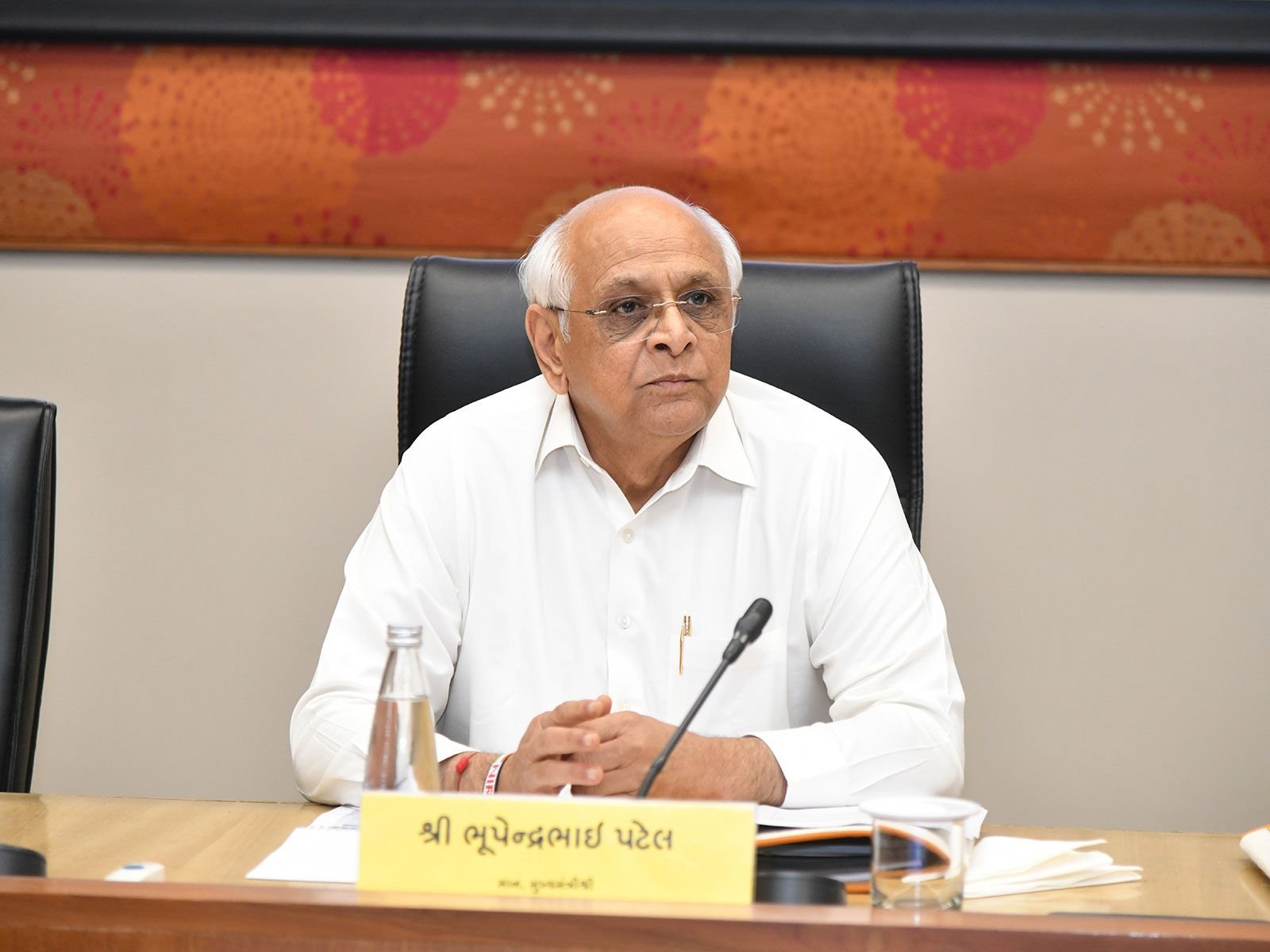
The Gujarat government has declared four districts drought-hit after a weak and delayed monsoon. Kutch, Jamnagar, Porbandar and Devbhumi Dwarka are the districts covered by the Gujarat drought declaration. Chief Minister Bhupendra Patel announced the decision in Gandhinagar on Monday, October 26, 2026.
The state has also announced a relief package. Farmers will get Rs 8,500 per hectare for crop loss, up to two hectares. In addition, rural families in the affected talukas will get 150 days of work. Cattle camps will receive Rs 80 per animal per day. All decisions take effect from November 1, 2026.
Gujarat drought 2026 at a glance
| Point | Details |
|---|---|
| Districts declared drought-hit | Kutch, Jamnagar, Porbandar, Devbhumi Dwarka |
| Talukas covered | 23 (as reported) |
| Announced by | CM Bhupendra Patel, with Agriculture Minister Jitu Vaghani |
| Date announced | October 26, 2026 |
| Effective from | November 1, 2026 |
| Crop loss aid | Rs 8,500 per hectare, maximum 2 hectares (SDRF norms) |
| Rural employment | 150 days under VB-G RAM G |
| Cattle camp aid | Rs 80 per animal per day for two months |
| Subsidised fodder | Rs 2 per kg |
| State rainfall this season | About 89% of the seasonal average |
Which districts are drought-hit in Gujarat?
Four districts in Kutch and western Saurashtra are now officially drought-hit. All four lie along Gujarat's dry western coast. Moreover, all four recorded far less rain than the rest of the state this monsoon.
State rainfall data, as reported by regional media, shows the scale of the shortfall:
| District | Rainfall received (% of average) | Deficit |
|---|---|---|
| Devbhumi Dwarka | 16.54% | About 84% |
| Porbandar | 30.86% | About 70% |
| Jamnagar | 43.26% | About 57% |
| Kutch | 57.60% | About 43% |
Devbhumi Dwarka is the worst hit. The district received only about one-sixth of its normal monsoon rain. As a result, standing kharif crops in large parts of the district have failed.
Why only four districts when Gujarat got 89% rain?
Gujarat as a whole received about 89% of its average seasonal rain. Up to October 21, the state recorded 810.68 mm against an average of 908.88 mm. On paper, that is close to normal.
However, the rain was unevenly spread. South and central Gujarat received steady showers. Meanwhile, the western belt stayed dry for long spells. The Chief Minister said the four districts received "very little rain" this season.
Several other districts also recorded a shortfall. Rajkot, Junagadh, Gir Somnath, Sabarkantha, Banaskantha, Aravalli, Chhota Udepur and Dahod each received between about 60% and 67% of their average. So far, however, none of them has been declared drought-hit. Regional media have reported that around 12 districts recorded a rain deficit.
The state says it followed the Centre's drought rules before making the decision. These rules use several indicators, not rainfall alone. Therefore, a district with a rain shortfall does not qualify automatically.
Gujarat drought relief package: what farmers will get
The main relief is crop-loss assistance. Farmers whose crops were damaged in the four districts will get Rs 8,500 per hectare. The payment follows State Disaster Response Fund (SDRF) norms. It is capped at two hectares per farmer, so the maximum payout is Rs 17,000.
Payments will follow a crop damage survey. According to reports, eligible farmers will be paid once the survey is complete. Farmers should therefore keep their land records and bank details ready.
The national norms for SDRF aid are published by the Disaster Management Division of the Ministry of Home Affairs. Farmers can also track state farm schemes on the i-Khedut portal and the Agriculture Department of Gujarat website.
150 days of work under VB-G RAM G
Rural families in the drought-declared talukas will get 150 days of wage work. This will be provided under VB-G RAM G, the Viksit Bharat – Guarantee for Rozgar and Ajeevika Mission (Gramin).
VB-G RAM G replaced MGNREGA and came into force on July 1, 2026. It normally guarantees 125 days of work a year. The drought declaration adds 25 more days for families in the affected talukas.
This matters because drought cuts farm labour demand sharply. Landless workers and small farmers lose income first. Extra days of guaranteed work help them stay in their villages instead of migrating. Details of the scheme are available from the Ministry of Rural Development.
Fodder and cattle camps for livestock owners
Livestock is central to rural life in Kutch and Saurashtra. Consequently, the package gives special attention to cattle rearers.
The government started selling subsidised fodder across Gujarat as early as June–July, when the rain was delayed. So far, about 1.21 crore kg of fodder has been sold at Rs 2 per kg. The state currently holds about 3 crore kg of fodder. In addition, it has started buying more stock.
Cattle camps in the drought-declared talukas will get Rs 80 per animal per day from the SDRF for two months. After that, the state government will bear the cost of continuing this aid, the Chief Minister said. District collectors have also been given special powers to arrange fodder distribution in specific cases.
Water supply: dams, drinking water and rabi irrigation
Water storage is the other big concern. Gujarat's 206 major dams together hold about 66% of their capacity, according to the government. However, reports say storage in some Saurashtra and North Gujarat reservoirs has fallen below 25%.
The state has made drinking water its first priority. Water for drinking has been reserved until June 30, 2027. Only after that, irrigation has been planned for the rabi season.
During the kharif season, irrigation water went to the command areas of 44 dams, based on demand. For rabi, the government plans to supply water to the command areas of 76 dams:
- North Gujarat: 11 dams, including Dharoi and Dantiwada
- Central Gujarat: 12 dams, including Karjan and Panam
- South Gujarat: 9 dams, including Ukai, Kakrapar and Damanganga
- Saurashtra: 39 dams, including Shetrunji, Brahmani and Machhu
- Kutch: 5 dams
Depending on water availability, farmers will get between one and four rounds of irrigation from these dams. Dam-wise updates are published by the Narmada, Water Resources, Water Supply and Kalpsar Department.
How is a district declared drought-hit in India?
In India, a state government declares drought, not the Centre. The process follows the Manual for Drought Management, 2016, issued by the Ministry of Agriculture and Farmers Welfare.
The manual uses a step-by-step test. First, officials check rainfall deficit and dry spells. Next, they study impact indicators such as crop sowing, satellite vegetation data, soil moisture, reservoir levels and groundwater. Finally, a field survey confirms crop damage.
The state then issues a formal notification. It names the talukas or villages covered and the level of drought, moderate or severe. A drought notification is valid for six months. After that, the situation must be reviewed again.
The Gujarat government said it completed this process and held high-level meetings before the announcement. Additional Chief Secretary (Revenue) Jayanti Ravi was also present at the press conference. Disaster relief in the state is handled by the Revenue Department. Training on drought assessment is run by the Gujarat Institute of Disaster Management.
What did the Chief Minister say?
Bhupendra Patel said the government had expected trouble from the late rain. Therefore, it began preparations well before the formal declaration. He added that the state stands with farmers and cattle rearers "with complete sensitivity."
Patel also said the government had always put farmers first under the guidance of Prime Minister Narendra Modi. He promised further help if farmers face any future crisis.
Opposition calls the aid too little
The Congress has criticised the size of the relief. State Congress president Amit Chavda said Rs 8,500 per hectare works out to only about Rs 85 per guntha. He noted that a single bag of DAP fertiliser costs around Rs 2,000. In his view, the aid will not cover farmers' real losses.
Pal Ambaliya, president of the Gujarat Pradesh Kisan Congress, also called the amount a cruel joke on farmers. He demanded that the government rethink the package. Furthermore, he warned of an agitation if the decision is not changed.
Questions have also been raised about the scope of the declaration. Critics point out that only four of around 12 rain-deficit districts were included.
How does this compare with the 2018 drought?
Gujarat last declared a major drought in December 2018. At that time, villages in 51 talukas across 16 districts were declared scarcity-hit or drought-hit. Crop aid was then Rs 6,800 per hectare, as per reports.
This year's declaration is smaller in area. However, the per-hectare crop aid is higher, at Rs 8,500. The state is also no stranger to drought. Kutch and Saurashtra faced severe droughts in 1985–87 and many times before.
Gujarat is not alone this year. Regional media report drought declarations in parts of Maharashtra, Karnataka, Rajasthan, Andhra Pradesh and Telangana as well. Many experts link the weak monsoon to El Niño conditions. Seasonal rainfall data is available from the India Meteorological Department.
What the drought means for Kutch and Saurashtra
Kutch and western Saurashtra depend heavily on rain-fed farming. Groundnut, cotton, bajra and castor are the main kharif crops here. When the monsoon fails, these crops fail with it.
The region also has one of Gujarat's largest livestock populations. Kutch is known for its pastoral communities and its Banni grasslands. Therefore, a dry year hits milk income as hard as crop income.
Coastal districts such as Devbhumi Dwarka and Porbandar face one more risk. Low rain reduces groundwater recharge. Over time, this can let salt water seep further inland and spoil wells.
In addition, a poor kharif season affects the rabi season too. Farmers without assured irrigation may leave land fallow this winter. That is why the timing of the irrigation plan matters as much as the cash aid.
How can farmers in the four districts claim relief?
The exact process will be set out in the official notification. Based on past practice, farmers can take these steps now:
- Keep land records ready, including 7/12 and 8-A extracts.
- Make sure your bank account is linked to Aadhaar for direct transfer.
- Cooperate with the revenue and agriculture staff during the crop damage survey.
- Watch for notices from the village panchayat, talati or taluka office.
- For work under VB-G RAM G, register with your gram panchayat if your family does not already hold a job card.
- Cattle rearers should contact the nearest cattle camp or the district collector's office for fodder and camp aid.
Farmers should rely only on official channels. They should not pay any middleman to get relief money.
What happens next?
The government is expected to issue a formal notification in the coming days. Relief work will start after that. Meanwhile, crop damage surveys will continue in the 23 affected talukas.
Farmers and cattle rearers in the four districts should contact their taluka office or the district collector's office for details. Official updates will also appear on the Gujarat Government portal.
Frequently asked questions (FAQs)
Which districts of Gujarat have been declared drought-hit in 2026?
Kutch, Jamnagar, Porbandar and Devbhumi Dwarka. The Gujarat government announced this on October 26, 2026.
How much crop-loss aid will farmers get in the Gujarat drought?
Farmers will get Rs 8,500 per hectare under SDRF norms, for up to two hectares. The maximum aid per farmer is therefore Rs 17,000.
When will the Gujarat drought relief measures start?
The relief measures take effect from November 1, 2026. Crop aid will be paid after the damage survey is complete.
How many days of work will rural families get?
Families in the drought-declared talukas will get 150 days of work under VB-G RAM G. That is 25 days more than the normal 125-day guarantee.
What help will cattle rearers get?
Cattle camps will get Rs 80 per animal per day for two months from the SDRF. After that, the state will pay. Fodder is also available at Rs 2 per kg.
Why was drought declared when Gujarat got 89% rain?
The 89% figure is a state average. The four districts received far less rain, ranging from about 17% to 58% of normal.
Which rules are used to declare drought in India?
States follow the Centre's Manual for Drought Management, 2016. It uses rainfall, crop, vegetation, soil moisture and water indicators, followed by a field survey.
With inputs from agencies.